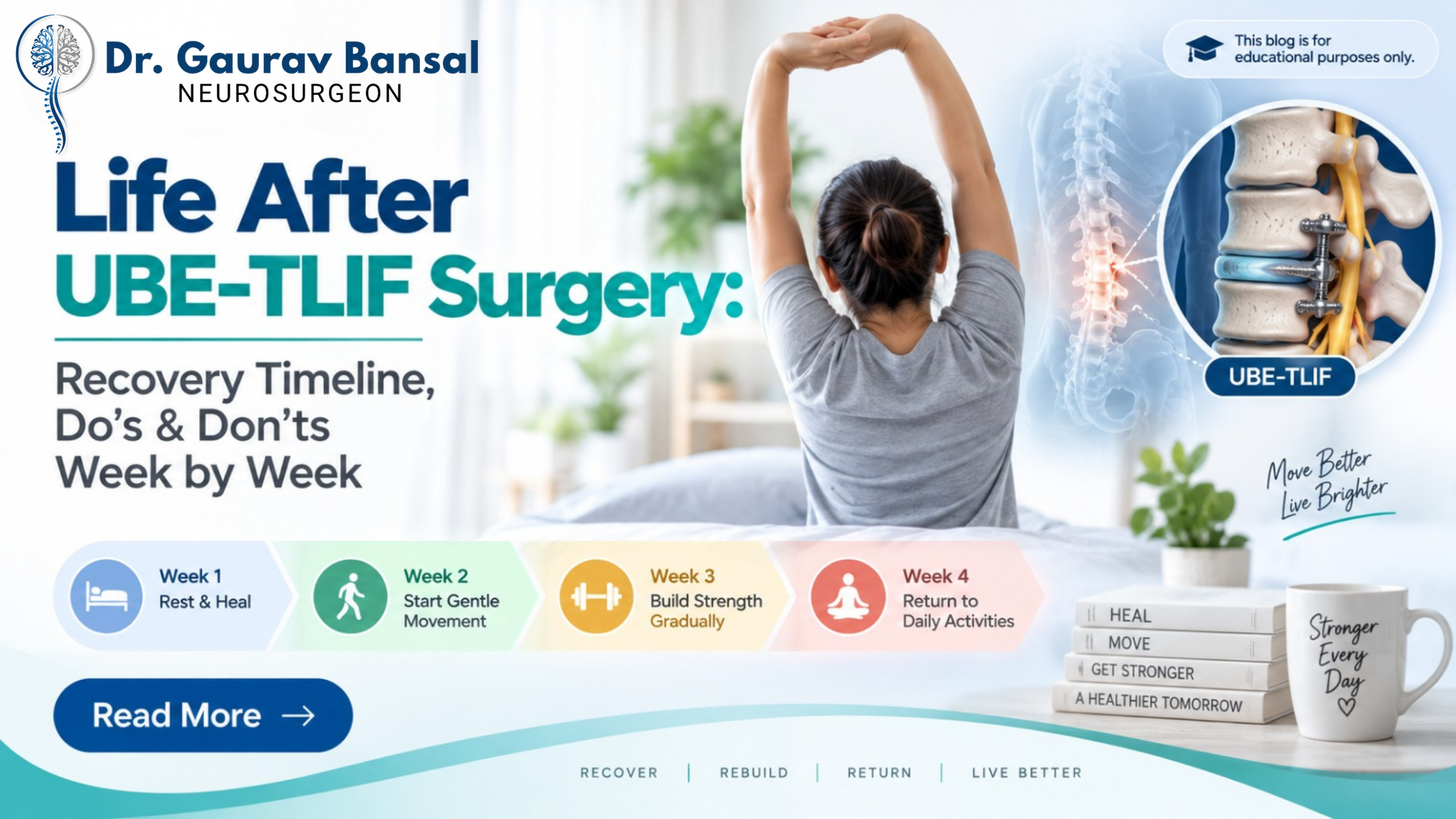
Life After UBE-TLIF Surgery: Recovery Timeline, Do's & Don'ts Week by Week
Undergoing spine surgery can feel like a major milestone, but recovery is equally important for achieving a good long-term outcome. UBE-TLIF (Unilateral Biportal Endoscopic Transforaminal Lumbar Interbody Fusion) is a minimally invasive spine surgery used in selected patients with conditions such as spinal instability, lumbar stenosis, spondylolisthesis, recurrent disc problems, or severe nerve compression.
Because UBE-TLIF uses small incisions and endoscopic techniques, it may reduce muscle and soft-tissue disruption compared with traditional open approaches. However, minimally invasive surgery does not mean the spine heals instantly. The bone fusion process continues for several months, so following postoperative instructions carefully is essential.
If you are looking for the best neurosurgeon in Vaishali, it is important to choose a specialist who can evaluate your condition, explain whether UBE-TLIF is appropriate, and provide structured postoperative guidance.
What to Expect After UBE-TLIF Surgery
Recovery differs from person to person depending on age, overall health, the number of spinal levels treated, bone quality, the severity of nerve compression, and adherence to rehabilitation. Some patients begin walking on the same day as, or the day after, surgery, while overall recovery typically progresses over approximately 6–12 weeks. Complete fusion, however, can take considerably longer.
The following week-by-week timeline provides a general guide. Your surgeon's instructions should always take priority.
Week 1: Rest, Walking and Wound Care
The first week is primarily about controlling pain, protecting the surgical area, and gradually becoming mobile.
Do:
Take prescribed medicines exactly as directed.
Take short, frequent walks as tolerated.
Keep the incision clean and follow wound-care instructions.
Use a brace if your surgeon has prescribed one.
Get adequate sleep and maintain a nutritious diet.
Ask for assistance with household activities.
Don't:
Bend forward repeatedly.
Twist your lower back.
Lift heavy objects.
Stay in bed continuously throughout the day.
Drive without medical clearance.
Walking is generally encouraged after lumbar fusion because gradual mobility can help maintain strength and reduce complications associated with prolonged inactivity.
Weeks 2–3: Gradually Increase Activity
During the second and third weeks, surgical discomfort may begin to decrease. You may be able to walk for longer periods and perform more basic daily activities.
Continue avoiding the BLT rule — bending, lifting, and twisting. Sitting for prolonged periods may also increase discomfort, so change positions regularly and take short walks.
A follow-up appointment may be scheduled around this period to assess wound healing, symptoms, and mobility.
If you are consulting the best neurosurgeon in Vaishali, ask about your individual activity restrictions, return-to-work timeline, and whether physiotherapy should begin at this stage.
Weeks 4–6: Improving Mobility and Function
By weeks four to six, many patients notice improvement in mobility and daily functioning. Back soreness may continue but should generally become more manageable.
Light activities may gradually increase under your surgeon's guidance. Depending on your occupation and recovery, you may be able to return to certain desk-based duties. Physically demanding jobs usually require a longer recovery period.
Do:
Continue walking regularly.
Follow your physiotherapy plan if prescribed.
Maintain good posture while sitting and standing.
Use proper techniques when getting in and out of bed.
Attend scheduled follow-up appointments.
Don't:
Start running or high-impact exercise without clearance.
Lift heavy weights.
Perform strenuous household chores.
Resume sports simply because you feel better.
Although symptoms can improve relatively quickly, the spinal fusion itself is still healing.
Weeks 6–8: Structured Rehabilitation
Around six to eight weeks, rehabilitation may become more progressive if your surgeon confirms that healing is proceeding appropriately.
Physical therapy may focus on posture, flexibility, controlled strengthening, core stability, and safe movement patterns. The goal is not simply to eliminate pain but to restore functional strength while protecting the healing spine.
Your doctor may also assess whether you can gradually increase walking distance, resume certain work activities, or begin specific low-impact exercises.
If you have persistent leg pain, increasing numbness or weakness, discuss these symptoms with your spine specialist rather than assuming they are a normal part of recovery.
Weeks 8–12: Returning to Routine
By the 8–12-week period, many patients can perform considerably more daily activities. Depending on the individual's healing and the type of surgery performed, rehabilitation can become more active.
However, feeling better does not necessarily mean the fusion is completely healed. Your surgeon may recommend imaging and continued activity restrictions based on your progress.
If you want guidance from the best neurosurgeon in Vaishali, regular follow-ups are important because recovery should be adjusted according to your symptoms, examination findings, and imaging results.
After 3 Months: Long-Term Spine Health
Recovery continues beyond the first three months. Bone fusion can take several months to mature, and your activity level should increase gradually rather than suddenly.
Maintaining a healthy weight, practicing good posture, exercising appropriately, and avoiding smoking or nicotine products can support long-term spinal health. Nicotine can interfere with bone healing and increase the risk of fusion problems.
Your surgeon may eventually allow activities that were restricted during the early recovery period. Always obtain clearance before returning to heavy lifting, running, intense gym workouts,s or contact sports.
Important Do's After UBE-TLIF
Follow your surgeon's instructions carefully.
Walk regularly and gradually increase distance.
Take medications as prescribed.
Keep follow-up appointments.
Follow recommended physiotherapy.
Maintain good posture.
Eat a balanced, protein-rich diet.
Avoid smoking and nicotine.
Report unusual symptoms promptly.
Important Don'ts After UBE-TLIF
Don't bend, lift, or twist unnecessarily.
Don't lift heavy objects without clearance.
Don't drive while taking medicines that cause drowsiness.
Don't start strenuous exercise too early.
Don't ignore worsening neurological symptoms.
Don't stop prescribed medication without consulting your doctor.
Don't assume that reduced pain means the fusion is completely healed.
When Should You Contact Your Doctor?
Contact your surgeon promptly if you develop increasing pain, wound redness or drainage, fever, significant swelling, new or worsening numbness, weakness, difficulty walking, or other concerning neurological symptoms. Calf swelling or tenderness can also require urgent medical assessment because blood clots are a potential postoperative complication.
Choosing the Right Spine Specialist
Successful recovery after UBE-TLIF involves more than the surgical procedure itself. Careful patient selection, appropriate surgical planning, postoperative monitoring, and rehabilitation all play important roles.
When searching for the best neurosurgeon in Vaishali, consider the surgeon's experience with minimally invasive and endoscopic spine procedures, their approach to postoperative rehabilitation, and whether they provide individualized follow-up care.
Remember that every recovery is different. A younger patient undergoing a single-level procedure may progress differently from someone with multilevel disease, osteoporosis, diabetes, or other medical conditions. Therefore, your surgeon's personalized instructions should always take priority over a general recovery timeline.
Conclusion
Life after UBE-TLIF surgery can gradually return to normal with patience, appropriate rehabilitation, and careful activity modification. The first few weeks focus on wound healing, pain control, and walking. Weeks 4–8 generally emphasize increasing mobility and beginning structured rehabilitation, while weeks 8–12 focus on restoring function and gradually returning to routine activities.
The key is to avoid rushing the healing process. Even when pain improves, the fusion continues to develop over time. With appropriate follow-up and healthy lifestyle habits, patients can work toward improved mobility, reduced nerve-related symptoms, and better quality of life.
For personalized advice about UBE-TLIF recovery or to consult the best neurosurgeon in Vaishali, discuss your symptoms, surgical details, and recovery progress with a qualified spine specialist.
FAQs
1. How long does recovery take after UBE-TLIF?
Initial functional recovery commonly takes around 6–12 weeks, while bone fusion may continue for several months.
2. Can I walk after UBE-TLIF surgery?
Yes. Walking is generally encouraged early after surgery, usually under the guidance of the surgical and rehabilitation team.
3. When can I return to work?
Desk-based work may resume earlier than physically demanding work, but the timing depends on your recovery and your surgeon's clearance.
4. How long should I avoid bending and lifting?
Restrictions vary. Many postoperative protocols limit bending, lifting, and twisting during the early healing period, sometimes for 6–12 weeks or longer.
5. Is physiotherapy needed after UBE-TLIF?
I recommend improving mobility, posture, strength, and functional recovery. Your surgeon should determine when and how it should begin.