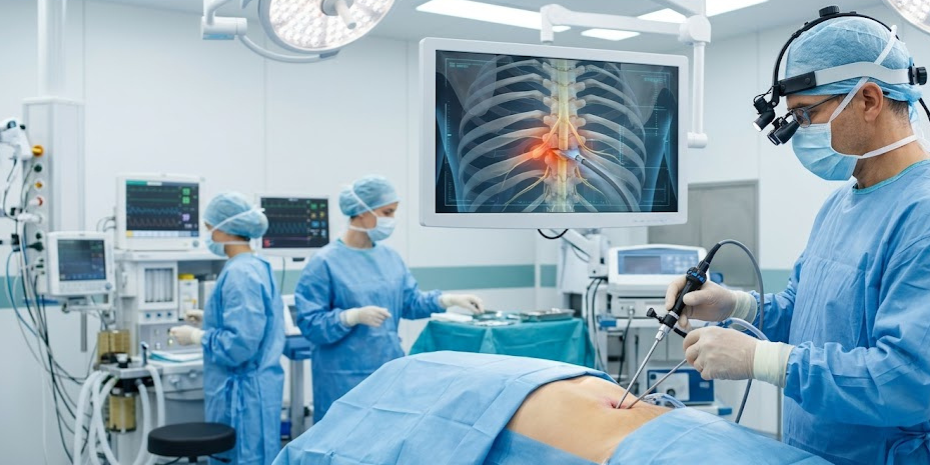
Advanced Minimally Invasive Surgery for Thoracic Spine Disorders
Thoracic Endoscopic Spine Surgery is a modern minimally invasive procedure used to treat selected spinal conditions affecting the thoracic (mid-back) region of the spine.
Using advanced endoscopic technology, surgeons can access the thoracic spine through small incisions with minimal disruption to surrounding muscles and tissues.
Compared to traditional open thoracic spine surgery, endoscopic techniques aim to reduce surgical trauma, postoperative pain, hospital stay, and recovery time in appropriately selected patients.
Thoracic endoscopic procedures are part of the continuing evolution of modern minimally invasive and endoscopic spine surgery.
What is Thoracic Endoscopic Spine Surgery?
The thoracic spine is the middle portion of the spine located between the neck and lower back.
Thoracic Endoscopic Spine Surgery uses:
High-definition endoscopic cameras
Specialized minimally invasive instruments
Small surgical portals or incisions
to treat spinal conditions in the thoracic region.
The procedure allows surgeons to visualize nerves, discs, and spinal structures with magnification while minimizing tissue damage.
Depending on the condition, the surgery may involve:
Disc removal
Nerve decompression
Removal of compressive tissue
Selected stabilization procedures
Who May Need Thoracic Endoscopic Spine Surgery?
Thoracic spine problems are less common than lumbar spine disorders but can sometimes cause significant pain, neurological symptoms, or walking difficulty.
Conditions That May Be Treated
Thoracic Disc Herniation
A slipped disc in the thoracic spine compressing the spinal cord or nerves.
Thoracic Spinal Stenosis
Narrowing of the spinal canal causing pressure on neural structures.
Thoracic Nerve Compression
Compression of thoracic nerve roots causing radiating pain or neurological symptoms.
Selected Thoracic Degenerative Conditions
Wear-and-tear changes affecting the thoracic spine.
Selected Revision Cases
Persistent or recurrent compression after previous surgery in carefully selected patients.
Common Symptoms of Thoracic Spine Problems
Symptoms depend on the location and severity of spinal cord or nerve compression.
Common Symptoms Include
Mid-back pain
Radiating chest or rib pain
Numbness or tingling
Weakness in the legs
Balance problems
Walking difficulty
Stiffness
Rarely, bowel or bladder symptoms in severe spinal cord compression
Thoracic spine disorders may sometimes mimic chest, abdominal, or muscular pain conditions.
Accurate diagnosis is important.
Who May Be Suitable for Thoracic Endoscopic Surgery?
Thoracic endoscopic procedures may be considered for patients who:
Have persistent symptoms despite conservative treatment
Show nerve or spinal cord compression on MRI
Have thoracic disc herniation
Experience progressive neurological symptoms
Need minimally invasive decompression
The suitability depends on:
MRI findings
Location of pathology
Severity of compression
Patient health
Surgical complexity
Not all thoracic spine conditions can be treated endoscopically.
Careful patient selection is essential.
How is Thoracic Endoscopic Spine Surgery Performed?
Step-by-Step Overview
Small Surgical Portals
Tiny incisions are made near the affected thoracic spinal level.
Endoscopic Visualization
A high-definition camera provides magnified visualization of spinal structures.
Instrument Access
Specialized instruments are introduced through working portals.
Decompression or Disc Removal
The surgeon carefully removes the tissue compressing the spinal cord or nerves.
Preservation of Normal Structures
The minimally invasive approach helps preserve muscles and surrounding tissues as much as possible.
Depending on the condition, different endoscopic approaches may be used.
Advantages of Thoracic Endoscopic Spine Surgery
Key Benefits
Minimally Invasive Technique
Small incisions reduce tissue injury.
Less Muscle Damage
Reduced disruption of surrounding muscles.
Better Visualization
Magnified endoscopic imaging improves surgical precision.
Reduced Blood Loss
Smaller exposure often results in less bleeding.
Reduced Postoperative Pain
Minimal tissue trauma may reduce discomfort after surgery.
Faster Recovery
Many patients recover earlier compared to traditional open procedures.
Smaller Scars
Cosmetic outcomes are generally improved.
Shorter Hospital Stay
Selected patients may benefit from reduced hospitalization.
Why Endoscopic Thoracic Surgery is a Major Advancement
Traditional thoracic spine surgery can be technically demanding because of:
Narrow spinal canal
Presence of the spinal cord
Rib cage anatomy
Limited surgical access
Modern endoscopic techniques provide:
Enhanced illumination
Magnified visualization
Precise decompression
Minimally invasive access pathways
These advancements may improve recovery while minimizing tissue disruption in selected patients.
Risks & Limitations of Thoracic Endoscopic Spine Surgery
Although minimally invasive, thoracic spine surgery remains a specialized and technically demanding procedure.
Possible Risks Include
Infection
Bleeding
Persistent pain
Nerve injury
Spinal cord injury
Dural tear (CSF leak)
Incomplete decompression
Recurrence of symptoms
Limitations
Thoracic endoscopic surgery may not be suitable for:
Severe spinal deformity
Extensive multi-level disease
Large complex lesions
Severe instability
Certain tumors or infections
Advanced spinal cord compression requiring open surgery
The final treatment approach should always be individualized.
Recovery Timeline After Thoracic Endoscopic Spine Surgery
Recovery varies depending on:
Type of thoracic pathology
Severity of spinal cord or nerve compression
Patient health
Extent of surgery
General Recovery Timeline
Same Day / Next Day
Early mobilization may begin depending on the procedure
1–2 Weeks
Gradual reduction in discomfort
Light activities resumed
2–6 Weeks
Improved mobility and functional recovery
6–12 Weeks
Rehabilitation and strengthening continue
Patients with significant preoperative spinal cord compression may require longer neurological recovery.
Who May Not Be Suitable for Endoscopic Thoracic Surgery?
Alternative treatment approaches may be recommended for patients with:
Severe spinal instability
Complex deformity
Extensive thoracic disease
Major spinal cord compression
Certain tumors or infections
Advanced multi-level pathology
Careful MRI evaluation and surgical planning are essential.
Frequently Asked Questions
Is Thoracic Endoscopic Spine Surgery Common?
Thoracic spine surgery is less common than lumbar surgery, but endoscopic techniques are increasingly being used in selected cases.
Is Thoracic Spine Surgery High Risk?
Thoracic spine surgery requires specialized expertise because of the nearby spinal cord, but modern imaging and minimally invasive techniques have improved surgical precision.
Can Thoracic Disc Herniation Cause Walking Difficulty?
Yes. Severe thoracic spinal cord compression can affect balance and walking.
Is Recovery Faster with Endoscopic Surgery?
Many patients experience reduced tissue trauma and faster recovery compared to traditional open surgery.
Will There Be a Large Scar?
No. Endoscopic procedures typically use small incisions with minimal scarring.
Is Endoscopic Surgery Suitable for Every Thoracic Spine Problem?
No. Suitability depends on the specific spinal condition, MRI findings, and overall surgical complexity.
Book a Consultation for Thoracic Spine Problems
If you are experiencing persistent mid-back pain, walking difficulty, numbness, weakness, or thoracic disc-related symptoms, expert spine evaluation can help determine the most appropriate treatment plan.
Schedule Your Appointment Today
Thoracic Spine Evaluation
MRI Review
Endoscopic Spine Surgery Consultation
Second Opinion for Spine Surgery
Personalized Treatment Planning