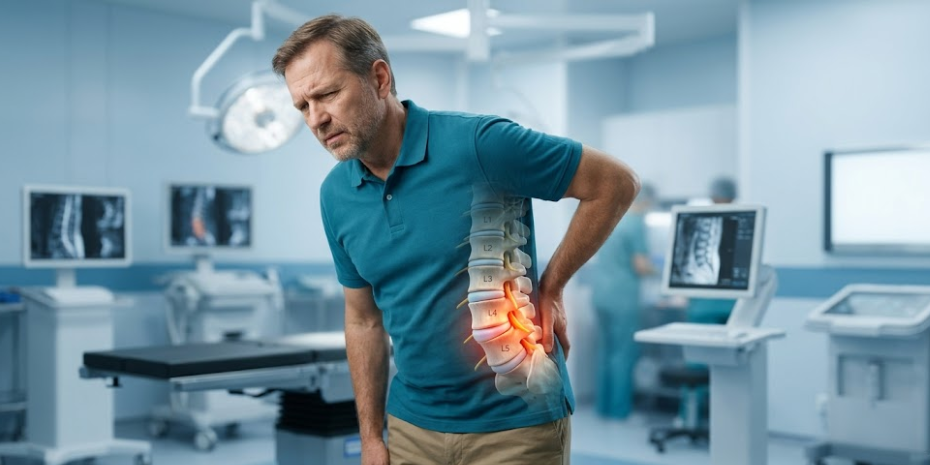
Understanding Vertebral Slip & Modern Fusion Surgery
Spondylolisthesis is a spinal condition in which one vertebra slips forward over the vertebra below it.
This condition can lead to spinal instability, nerve compression, lower back pain, leg pain, and walking difficulty.
The severity of symptoms varies from mild discomfort to significant functional limitation.
While many patients improve with conservative treatment, some cases may require advanced stabilization procedures such as UBE-TLIF (Unilateral Biportal Endoscopic Transforaminal Lumbar Interbody Fusion) or other minimally invasive fusion techniques.
What is Vertebral Slip?
The spine is made up of multiple vertebrae stacked one above another.
In spondylolisthesis, one vertebra shifts forward due to instability or structural weakness.
This forward slipping can compress nearby nerves and disturb normal spinal alignment.
Common Causes of Spondylolisthesis
Degenerative Changes
Age-related wear and tear causing weakening of joints and discs.
Stress Fracture (Spondylolysis)
A defect in a portion of the vertebra that may lead to slippage.
Disc Degeneration
Loss of disc height and stability over time.
Congenital Causes
Some individuals are born with structural spinal abnormalities.
Trauma or Injury
Accidents or spinal injuries can occasionally cause vertebral instability.
Symptoms of Spondylolisthesis
Symptoms depend on the degree of vertebral slip and nerve compression.
Common Symptoms
Lower back pain
Leg pain (Sciatica)
Numbness or tingling
Muscle tightness
Weakness in the legs
Difficulty walking
Pain during standing or activity
Reduced spinal flexibility
Some patients may experience symptoms mainly during movement, while others may develop persistent nerve-related pain.
How is Spondylolisthesis Diagnosed?
Diagnosis usually includes:
Clinical examination
Neurological assessment
X-rays
Dynamic flexion-extension X-rays
MRI scan
CT scan in selected cases
MRI helps evaluate:
Nerve compression
Disc degeneration
Spinal canal narrowing
Associated slipped disc or stenosis
Dynamic X-rays help assess spinal instability and movement between vertebrae.
Non-Surgical Treatment Options
Many mild or early cases improve without surgery.
Conservative Treatment May Include
Medications
Pain-relief and anti-inflammatory medicines.
Physiotherapy
Exercises focused on strengthening core muscles and improving spinal stability.
Activity Modification
Avoiding activities that worsen symptoms.
Lifestyle Changes
Weight management, posture correction, and guided exercise.
Spinal Injections
In selected cases, injections may temporarily reduce inflammation and pain.
Conservative treatment may help relieve symptoms, but significant instability sometimes requires surgical stabilization.
When Fusion Surgery May Be Needed
Fusion surgery may be recommended when spinal instability becomes significant or symptoms persist despite conservative care.
Common Indications for Fusion Surgery
Persistent severe back pain
Progressive vertebral slip
Significant nerve compression
Sciatica not improving with treatment
Weakness or walking difficulty
Mechanical instability
Recurrent symptoms affecting daily life
The decision for surgery depends on imaging findings, spinal stability, symptoms, and functional limitation.
UBE-TLIF / Minimally Invasive Fusion Surgery
Advanced Minimally Invasive Stabilization
UBE-TLIF (Unilateral Biportal Endoscopic Transforaminal Lumbar Interbody Fusion) is an advanced minimally invasive fusion technique used to stabilize the spine while relieving nerve compression.
The procedure combines:
Biportal endoscopic visualization
Minimally invasive decompression
Spinal stabilization with fusion
Goals of UBE-TLIF
Stabilize the slipped vertebra
Relieve nerve pressure
Reduce back and leg pain
Restore spinal alignment
Improve mobility and function
Advantages of UBE-TLIF / MIS Fusion
Key Benefits
Smaller incisions
Minimal muscle damage
Less blood loss
Reduced postoperative pain
Faster mobilization
Better visualization
Shorter hospital stay
Faster rehabilitation compared to traditional open fusion
UBE-TLIF combines the advantages of minimally invasive surgery with advanced endoscopic precision.
It is increasingly considered one of the latest developments in modern spine fusion surgery.
Recovery After Fusion Surgery
Recovery depends on:
Severity of instability
Number of spinal levels involved
Patient age and overall health
Bone quality
Rehabilitation program
General Recovery Timeline
Same Day / Next Day
Early mobilization usually begins
1–2 Weeks
Gradual reduction in surgical discomfort
Walking activity increases
2–6 Weeks
Return to light daily activities
Improved mobility
6–12 Weeks
Progressive strengthening and rehabilitation
Fusion healing continues over several months, and regular follow-up may be required.
Physiotherapy and guided rehabilitation play an important role in long-term recovery.
When Should You Consult a Spine Specialist?
Seek medical evaluation if you experience:
Persistent lower back pain
Sciatica
Leg weakness
Walking difficulty
Numbness or tingling
Symptoms affecting daily activities
Back pain not improving with conservative treatment
Early diagnosis may help prevent worsening instability and nerve damage.
Frequently Asked Questions
Is Spondylolisthesis Serious?
The severity varies. Mild cases may remain stable, while severe instability can cause nerve compression and functional limitation.
Does Every Vertebral Slip Need Surgery?
No. Many patients improve with physiotherapy, medicines, and lifestyle changes.
What is Fusion Surgery?
Fusion surgery stabilizes the spine by joining two vertebrae together using implants and bone grafts.
Is UBE-TLIF Minimally Invasive?
Yes. UBE-TLIF is designed to minimize muscle injury and surgical trauma while achieving spinal stabilization.
How Long Does Recovery Take?
Recovery varies between individuals, but many patients gradually resume routine activities within weeks while fusion healing continues over time.
Book a Consultation for Spondylolisthesis Treatment
If you are suffering from persistent back pain, sciatica, spinal instability, or walking difficulty, expert evaluation can help determine the most suitable treatment plan.
Schedule Your Appointment Today
MRI & X-ray Review
Spine Stability Evaluation
Endoscopic Spine Surgery Consultation
UBE-TLIF Assessment
Second Opinion for Spine Surgery