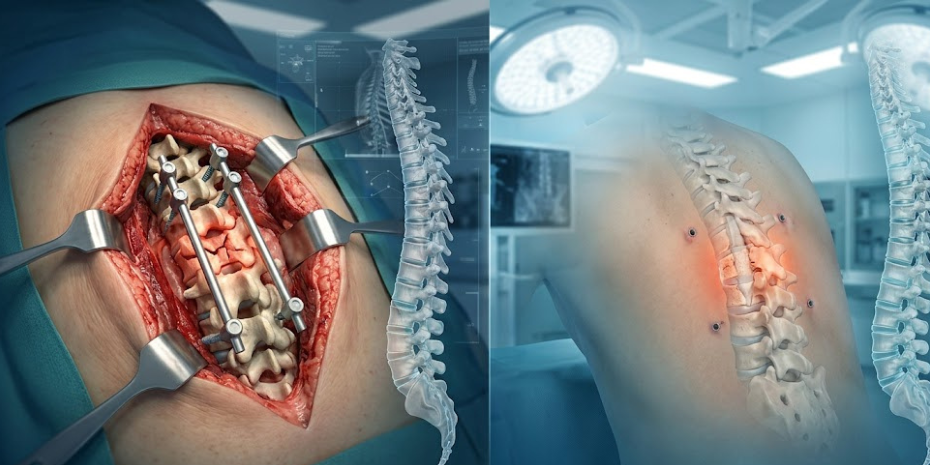
Understanding Modern Approaches to Spine Fracture Treatment
Spinal fractures can range from minor stable injuries to severe trauma affecting spinal stability, posture, and neurological function.
Treatment depends on multiple factors, including:
Type of fracture
Severity of spinal instability
Presence of nerve compression
Bone quality
Patient age and health condition
Degree of deformity
Associated injuries
Over the years, spine fracture treatment has evolved from traditional open surgery toward advanced minimally invasive stabilization techniques often referred to as:
“Stitch-less” or “Scar-less” Spine Fracture Surgery
These modern techniques aim to stabilize the spine through very small incisions while minimizing tissue damage and supporting faster recovery in selected patients.
Importantly:
No single technique is best for every patient.
The most suitable treatment depends on:
Fracture pattern
Stability of the spine
Neurological involvement
Bone quality
Surgical goals
Surgeon expertise and experience
Overall patient condition
The priority is always safe, evidence-based, and individualized fracture care.
What is Open Spine Fracture Surgery?
Traditional open spine fracture surgery involves:
Larger surgical exposure
Direct visualization of spinal structures
Muscle dissection to access the spine
Placement of screws, rods, cages, or other stabilization implants
Open surgery has been the standard treatment for many complex spinal injuries for decades and remains an essential option in selected cases.
It may be particularly important for:
Severe trauma
Complex instability
Major deformity correction
Spinal cord compression
Multi-level fractures
What is Stitch-less / Scar-less Spine Fracture Surgery?
“Stitch-less” or “Scar-less” spine fracture surgery generally refers to:
Minimally Invasive Spine Fracture Stabilization
performed using:
Tiny skin incisions
Percutaneous screw placement
Image-guided technology
Specialized minimally invasive instruments
The goal is to stabilize the spine while preserving muscles and reducing tissue trauma.
In many cases, skin closure may involve very small cosmetic sutures or skin adhesives, leading to minimal visible scarring.
Why is it Called “Stitch-less” or “Scar-less”?
The term is commonly used because minimally invasive fracture surgery often involves:
Very small skin openings
Minimal muscle disruption
Small cosmetic scars
Reduced tissue handling
However, it is important to understand:
No spine surgery is truly “scar-free.”
The term mainly refers to smaller incisions and minimally visible scars compared to traditional open procedures.
Patient education and realistic expectations are important.
How Open & Minimally Invasive Fracture Surgery Differ
Open Surgery
Larger incision
Direct wide exposure
Greater muscle dissection
Direct access to spinal structures
Minimally Invasive / Stitch-less Surgery
Small incisions
Percutaneous implant placement
Reduced muscle injury
Image-guided stabilization techniques
Both approaches aim to restore spinal stability and protect neurological function.
Conditions Commonly Treated
Open Surgery May Commonly Be Needed For
Severe spinal trauma
Major instability
Complex deformity
Multi-level fractures
Spinal cord compression
Complex reconstruction procedures
Minimally Invasive Fracture Surgery May Commonly Be Used For
Selected compression fractures
Osteoporotic fractures
Certain traumatic fractures
Stable or moderately unstable fractures
Percutaneous stabilization procedures
Again, the ideal treatment depends on the individual fracture pattern and patient condition.
Surgical Techniques Used in Minimally Invasive Fracture Surgery
Modern minimally invasive fracture procedures may include:
Percutaneous Pedicle Screw Fixation
Screws and rods inserted through small skin incisions.
Kyphoplasty
Balloon-assisted vertebral height restoration with cement stabilization.
Vertebroplasty
Bone cement injection into fractured vertebrae.
Image-Guided Stabilization
Advanced imaging systems improve implant placement accuracy.
These techniques help reduce tissue trauma while maintaining spinal stability.
Benefits of Open Spine Fracture Surgery
Potential Advantages
Direct Surgical Exposure
Allows access to complex spinal anatomy.
Useful for Severe Trauma
Important for major instability or deformity correction.
Comprehensive Decompression Capability
Allows direct treatment of spinal cord or nerve compression.
Strong Stabilization Options
Useful in highly unstable fractures.
Open surgery remains an important and necessary option in many complex spine trauma cases.
Benefits of Stitch-less / Minimally Invasive Fracture Surgery
Potential Advantages
Smaller Incisions
Reduced surgical exposure.
Less Muscle Damage
Muscles are preserved rather than extensively detached.
Reduced Blood Loss
Minimally invasive techniques often reduce bleeding.
Faster Mobilization
Many patients begin walking earlier.
Reduced Postoperative Pain
Less tissue trauma may improve recovery comfort.
Shorter Hospital Stay
Selected patients may recover faster.
Smaller Scars
Cosmetic outcomes are generally improved.
Reduced Recovery Stress
Particularly beneficial for elderly or medically fragile patients in selected cases.
Risks & Limitations
All spine fracture surgeries carry potential risks regardless of technique.
Possible Risks Include
Infection
Bleeding
Implant-related complications
Persistent pain
Nerve irritation or injury
Implant loosening
Adjacent level issues
Incomplete symptom relief
Limitations of Minimally Invasive Fracture Surgery
Not every fracture is suitable for minimally invasive stabilization.
Open surgery may still be required for:
Severe spinal cord compression
Major instability
Complex deformity
Extensive trauma
Multi-level reconstruction
Certain tumor-related fractures
Proper patient selection is critical.
Which Technique is Better?
The Most Important Principle:
The best technique is the one most appropriate for the individual patient.
No surgical method is universally superior for every spine fracture.
The final treatment decision depends on:
Fracture severity
Instability
Neurological status
Bone quality
MRI and CT findings
Patient health condition
Surgical goals
Surgeon expertise
Both open surgery and minimally invasive stabilization techniques are valuable tools in modern spine trauma care.
Recovery After Spine Fracture Surgery
Recovery depends on:
Type of fracture
Severity of injury
Procedure performed
Bone quality
Patient health condition
General Recovery Expectations
Early Phase
Walking may begin within 24–48 hours in selected patients
First Few Weeks
Gradual improvement in mobility
Pain reduction
Activity progression
Long-Term Recovery
Bone healing
Physiotherapy
Strengthening exercises
Osteoporosis management when required
Recovery timelines vary significantly depending on injury severity.
Frequently Asked Questions
Is Stitch-less Spine Surgery Truly Scar-free?
No. The term refers to very small incisions and minimal visible scarring rather than complete absence of scars.
Is Minimally Invasive Surgery Better Than Open Surgery?
Neither approach is universally better for every patient. The correct procedure depends on fracture type, instability, and patient condition.
Can Severe Spine Fractures Be Treated Minimally Invasively?
Some fractures can be treated using minimally invasive stabilization, while others require traditional open surgery.
Is Recovery Faster After Minimally Invasive Surgery?
Many patients experience reduced tissue trauma and earlier mobilization compared to traditional open procedures.
Does Every Spine Fracture Need Surgery?
No. Many stable fractures heal successfully with conservative treatment and bracing.
Can Elderly Patients Benefit from Minimally Invasive Stabilization?
Selected elderly patients with osteoporotic fractures may benefit significantly from minimally invasive procedures.
How is the Final Surgical Decision Made?
The decision is based on clinical evaluation, imaging findings, neurological status, fracture stability, and overall patient health.
Ethical & Evidence-Based Spine Trauma Care
Modern spine fracture treatment should never focus on promoting one surgical technique for every patient.
The priority should always be:
Accurate diagnosis
Patient safety
Conservative treatment whenever appropriate
Individualized treatment planning
Evidence-based surgical decision-making
Different fractures require different treatment strategies.
The goal is always to provide the safest and most appropriate treatment for long-term spinal stability and recovery.
Book a Consultation for Spine Fracture Evaluation
If you are experiencing severe back pain after trauma, fall, or accident, expert spine evaluation is important to assess fracture stability and determine the most suitable treatment approach.
Schedule Your Appointment Today
Spine Fracture Evaluation
MRI & CT Review
Minimally Invasive Fracture Stabilization Consultation
Second Opinion for Spine Trauma
Personalized Treatment Planning