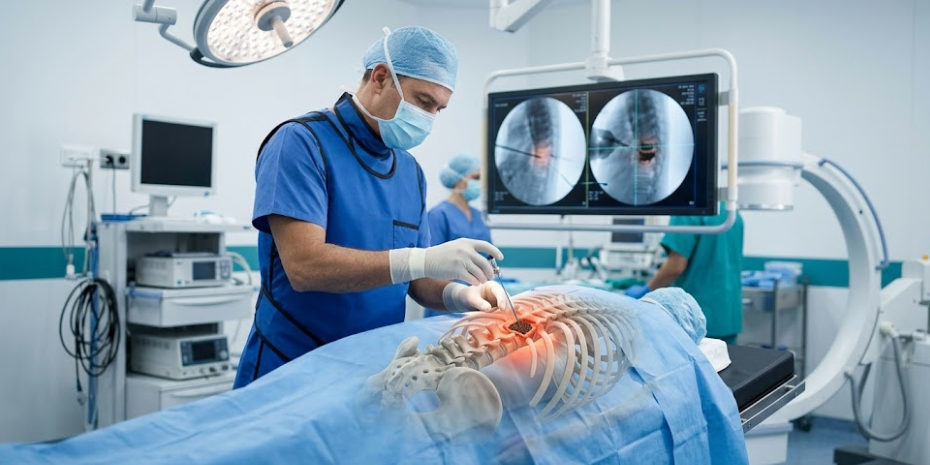
Minimally Invasive Treatment for Painful Spinal Compression Fractures
Vertebroplasty is a minimally invasive spine procedure used to treat painful vertebral compression fractures, most commonly caused by osteoporosis.
The procedure involves injecting special medical bone cement into the fractured spinal bone (vertebra) to stabilize it and reduce pain.
Vertebroplasty may help selected patients experience:
Faster pain relief
Improved mobility
Better spinal stability
Earlier return to daily activities
It is commonly performed in elderly patients with osteoporotic spine fractures, but may also be considered in selected fractures related to tumors or other spinal conditions.
What is Vertebroplasty?
The spine is made up of multiple bones called vertebrae.
When a vertebra weakens and collapses, it is called a vertebral compression fracture.
Vertebroplasty is a minimally invasive procedure in which:
A needle is inserted into the fractured vertebra
Special bone cement is injected into the bone
The cement hardens and stabilizes the fracture
The goal is to reduce painful movement within the fractured bone and improve spinal support.
Who May Need Vertebroplasty?
Vertebroplasty may be considered for selected patients with painful vertebral compression fractures.
Common Conditions Treated
Osteoporotic Compression Fractures
The most common indication, especially in elderly patients with weak bones.
Painful Vertebral Collapse
Fractures causing severe back pain and reduced mobility.
Selected Tumor-Related Vertebral Lesions
Some spinal tumors or metastatic lesions may weaken vertebral bones.
Persistent Pain Despite Conservative Treatment
Pain not improving with medications, rest, or bracing.
Common Symptoms of Vertebral Compression Fracture
Sudden onset back pain
Pain worsening while standing or walking
Difficulty moving
Reduced mobility
Height loss
Stooped posture in severe osteoporosis
Pain often develops after:
Minor falls
Lifting
Sudden movement
Sometimes even without obvious trauma
Who May Not Need Vertebroplasty?
Not every spinal fracture requires vertebroplasty.
Many fractures improve with:
Rest
Pain medications
Bracing
Osteoporosis treatment
Physiotherapy
The decision depends on:
Severity of pain
Fracture stability
MRI findings
Functional limitation
Overall patient health
An evidence-based evaluation is important before recommending the procedure.
How is Vertebroplasty Performed?
Step-by-Step Overview
Imaging Guidance
The procedure is performed using X-ray or fluoroscopic guidance for precision.
Small Needle Entry
A specialized needle is inserted into the fractured vertebra through a small skin puncture.
Bone Cement Injection
Medical-grade bone cement is carefully injected into the collapsed vertebra.
Cement Hardening
The cement hardens rapidly and stabilizes the fracture.
Completion
The needle is removed, and no large incision is required.
The procedure is generally minimally invasive and often completed in a relatively short duration.
Benefits of Vertebroplasty
Key Advantages
Minimally Invasive Procedure
No large surgical incision is required.
Pain Relief
Many patients experience significant reduction in fracture-related pain.
Improved Mobility
Patients may walk and move more comfortably after stabilization.
Faster Recovery
Reduced pain may help patients return to routine activities sooner.
Short Hospital Stay
Hospitalization is often brief in selected cases.
Reduced Need for Prolonged Bed Rest
Early mobilization helps reduce complications related to immobility in elderly patients.
Stabilization of Fracture
The injected cement strengthens the fractured vertebra.
Risks & Limitations of Vertebroplasty
Although vertebroplasty is generally considered safe in appropriately selected patients, every medical procedure carries potential risks.
Possible Risks Include
Infection
Bleeding
Cement leakage
Nerve irritation
Persistent pain
Allergic reaction
Rare neurological complications
Limitations of Vertebroplasty
Vertebroplasty may not be suitable for:
Stable fractures improving with conservative care
Certain severe fracture patterns
Active spinal infection
Severe spinal cord compression
Asymptomatic fractures
The procedure treats fracture-related pain and stability but does not cure underlying osteoporosis.
Long-term bone health management remains essential.
Recovery Timeline After Vertebroplasty
Recovery varies depending on:
Severity of fracture
Patient age
Bone quality
Overall medical condition
General Recovery Timeline
Same Day / Next Day
Many patients begin walking early after the procedure
First Few Days
Gradual reduction in pain
Improved mobility
1–2 Weeks
Increased comfort during daily activities
Long-Term Recovery
Osteoporosis treatment
Physiotherapy
Fall prevention strategies
Bone health management
Patients are usually advised to continue osteoporosis treatment to reduce the risk of future fractures.
Importance of Osteoporosis Management
Treating the fracture alone is not enough.
Long-term spine and bone health should include:
Calcium and Vitamin D management
Osteoporosis medications when needed
Weight-bearing exercise
Fall prevention
Regular bone health evaluation
Preventing future fractures is extremely important.
Frequently Asked Questions
Is Vertebroplasty a Major Surgery?
No. It is a minimally invasive procedure performed through a small needle puncture.
Is Vertebroplasty Painful?
The procedure is generally performed under anesthesia or sedation to maintain patient comfort.
How Long is Hospital Stay?
Many patients require a short hospital stay depending on recovery and overall health.
How Quickly Does Pain Improve?
Some patients experience rapid pain relief, while others improve gradually over days to weeks.
Does Vertebroplasty Cure Osteoporosis?
No. The procedure stabilizes the fracture but does not treat the underlying bone weakness.
Can Vertebroplasty Prevent Future Fractures?
It stabilizes the treated vertebra, but osteoporosis management is essential to reduce future fracture risk.
Is Vertebroplasty Safe for Elderly Patients?
Selected elderly patients with painful osteoporotic fractures may benefit significantly from minimally invasive stabilization procedures.
Ethical & Evidence-Based Spine Care
Not every spinal compression fracture requires vertebroplasty.
Treatment decisions should always be based on:
Clinical symptoms
MRI and imaging findings
Severity of pain
Functional limitation
Overall patient health
An ethical, patient-centered approach focuses on recommending procedures only when clearly beneficial and medically appropriate.
Book a Consultation for Vertebroplasty
If you are experiencing severe back pain after a spinal compression fracture, osteoporosis-related vertebral collapse, or difficulty walking due to spine fracture pain, expert evaluation can help determine whether vertebroplasty may be suitable for your condition.
Schedule Your Appointment Today
MRI & Spine Fracture Evaluation
Osteoporosis Spine Assessment
Vertebroplasty Consultation
Second Opinion for Spine Fractures
Personalized Treatment Planning