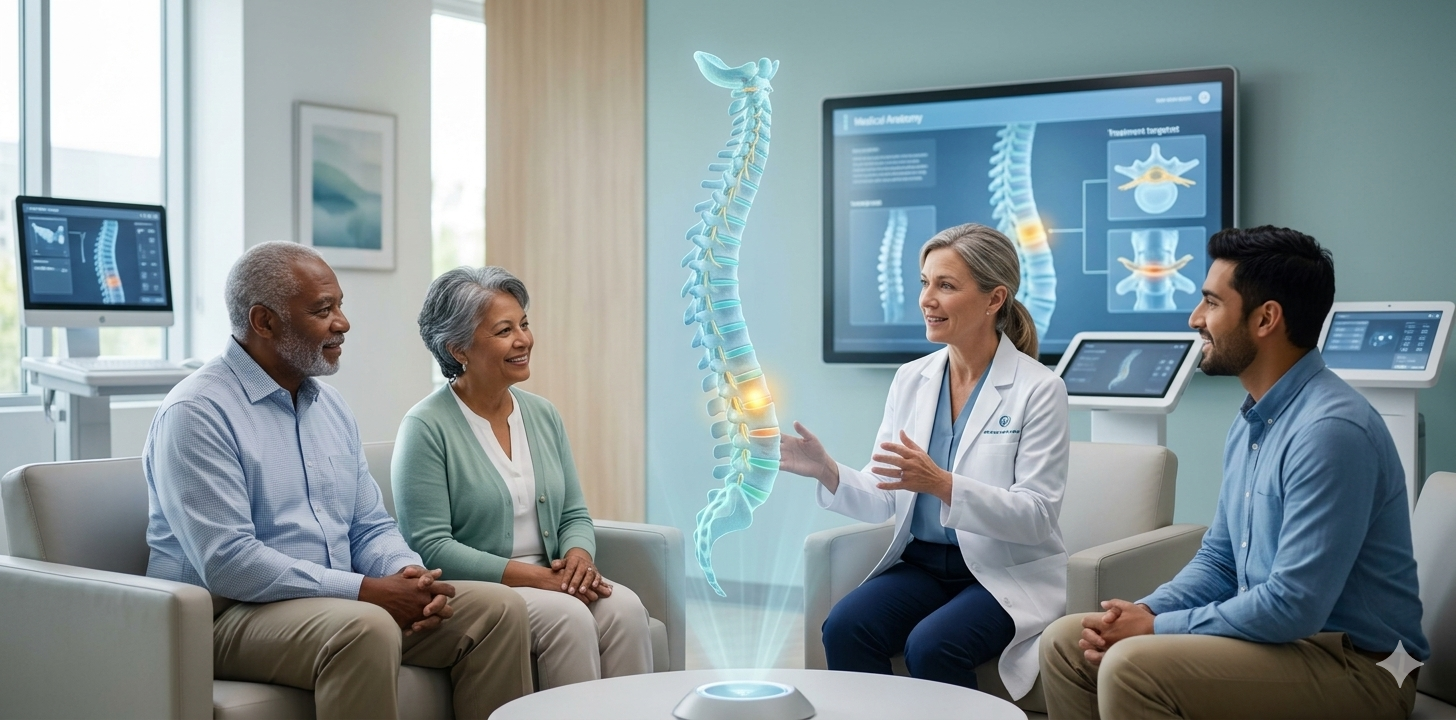
Spine Knowledge Center
Understanding your spine condition is the first step toward better treatment and recovery. The Spine Knowledge Center is designed to help patients and families learn about common spinal problems, treatment options, modern minimally invasive procedures, recovery guidance, and important spine health information in simple and easy-to-understand language.
Patient Education for Better Spine Health
Understanding your spine condition is the first step toward better treatment and recovery.
The Spine Knowledge Center is designed to help patients and families learn about common spinal problems, treatment options, modern minimally invasive procedures, recovery guidance, and important spine health information in simple and easy-to-understand language.
Our goal is to empower patients with accurate, evidence-based education so they can make informed decisions about their spine care.
Spine Basics
Understanding Your Spine
The spine is one of the most important structures in the human body. It supports posture, protects the spinal cord, and allows movement such as bending, twisting, and walking.
The spine is made up of:
Vertebrae (bones)
Intervertebral discs
Spinal nerves
Joints
Ligaments
Muscles
Main Parts of the Spine
Cervical Spine
The neck region.
Thoracic Spine
The upper and middle back.
Lumbar Spine
The lower back region, where most slipped disc and sciatica problems occur.
Sacrum & Coccyx
The lower end of the spine.
Problems affecting these structures can lead to back pain, nerve compression, weakness, numbness, and difficulty walking.
Slipped Disc
What is a Slipped Disc?
A slipped disc, also known as a herniated disc or prolapsed disc, occurs when the soft inner portion of the spinal disc bulges outward and compresses nearby nerves.
Common Symptoms
Lower back pain
Leg pain
Sciatica
Tingling
Numbness
Weakness
Causes
Age-related degeneration
Heavy lifting
Sudden strain
Poor posture
Sedentary lifestyle
Treatment Options
Many patients improve with:
Medicines
Physiotherapy
Lifestyle changes
In selected cases, advanced minimally invasive or endoscopic spine surgery may be considered.
Sciatica
What is Sciatica?
Sciatica refers to pain radiating from the lower back into the buttock, thigh, leg, or foot due to irritation or compression of the sciatic nerve.
Common Symptoms
Sharp shooting leg pain
Burning sensation
Tingling
Numbness
Weakness
Pain while sitting or walking
Common Causes
Slipped disc
Lumbar canal stenosis
Nerve compression
Early evaluation is important if symptoms are severe or progressive.
Spine Stenosis
What is Spine Stenosis?
Spinal stenosis occurs when the spinal canal becomes narrow, placing pressure on nerves.
Lumbar canal stenosis commonly affects older adults.
Symptoms
Leg pain while walking
Heaviness in legs
Numbness
Weakness
Difficulty standing for long periods
Treatment
Treatment may include:
Physiotherapy
Medications
Injections
Minimally invasive decompression surgery
Endoscopic spine surgery
Endoscopic Spine Surgery
Advanced Minimally Invasive Spine Treatment
Endoscopic spine surgery is a modern technique that uses a small camera and specialized instruments to treat spinal problems through tiny incisions.
Advantages
Smaller scars
Less pain
Reduced blood loss
Faster recovery
Shorter hospital stay
Early return to daily activities
Conditions Commonly Treated
Slipped disc
Sciatica
Lumbar canal stenosis
Nerve compression
Advanced techniques such as UBE / Biportal Endoscopic Spine Surgery are considered among the latest developments in modern spine care.
Stitch-less, Scar-less Spine Surgery
What Does “Stitch-less” or “Scar-less” Mean?
Modern minimally invasive and endoscopic spine surgeries use extremely small incisions that may require minimal or cosmetic closure techniques.
This leads to:
Minimal visible scarring
Less tissue damage
Faster healing
Better cosmetic outcome
Although no surgery is truly “scar-free,” advanced endoscopic techniques significantly reduce surgical marks compared to traditional open surgery.
Recovery After Spine Surgery
What to Expect During Recovery
Recovery depends on:
Type of spine problem
Surgical procedure performed
Patient’s overall health
Rehabilitation and physiotherapy
General Recovery Timeline
Same Day / Next Day
Walking usually begins early
First 2 Weeks
Gradual pain reduction
Light activities resume
2–6 Weeks
Improved mobility
Return to routine work in selected cases
6–12 Weeks
Functional recovery progresses
Following postoperative instructions and rehabilitation plans is important for optimal recovery.
Myths & Facts About Spine Surgery
Myth:
“Spine surgery is always dangerous.”
Fact:
Modern spine surgery techniques are significantly safer and more advanced than older procedures.
Myth:
“All back pain needs surgery.”
Fact:
Most back pain improves with non-surgical treatment.
Myth:
“Bed rest is the best treatment for back pain.”
Fact:
Prolonged bed rest may worsen stiffness and weakness. Guided activity is usually recommended.
Myth:
“Endoscopic surgery is only for minor problems.”
Fact:
Advanced endoscopic techniques can now treat many complex spinal conditions in selected patients.
Myth:
“Recovery after spine surgery takes many months.”
Fact:
Modern minimally invasive techniques often allow faster recovery and earlier mobilization.
MRI Explained
Why is MRI Important for Spine Problems?
MRI (Magnetic Resonance Imaging) is one of the most important investigations for diagnosing spinal conditions.
It helps visualize:
Discs
Nerves
Spinal canal
Ligaments
Soft tissues
MRI Can Help Detect
Slipped disc
Nerve compression
Spinal stenosis
Infection
Tumors
Degenerative changes
MRI findings should always be interpreted along with symptoms and clinical examination.
When to See a Spine Surgeon
Warning Signs That Need Evaluation
You should consider consulting a spine specialist if you have:
Persistent back pain
Severe neck pain
Sciatica
Numbness or tingling
Weakness in arms or legs
Difficulty walking
Pain not improving with medicines or physiotherapy
Loss of bladder or bowel control (medical emergency)
Early diagnosis may help prevent worsening nerve damage and improve treatment outcomes.
Our Approach to Patient Education
We believe informed patients make better healthcare decisions.
Our patient education philosophy focuses on:
Clear explanations
Honest guidance
Evidence-based treatment
Personalized care
Modern minimally invasive solutions
We aim to help patients understand both surgical and non-surgical treatment options for spine conditions.
Book a Spine Consultation
If you are experiencing persistent back pain, sciatica, slipped disc symptoms, or walking difficulty, expert evaluation can help identify the cause and guide appropriate treatment.
Schedule Your Appointment Today
Spine Evaluation
MRI Review
Second Opinion
Endoscopic Spine Surgery Consultation
Personalized Treatment Planning