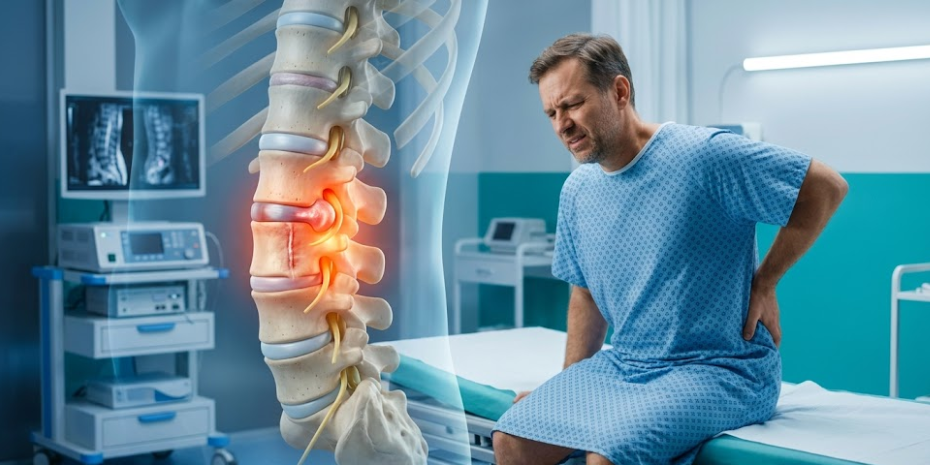
Understanding Recurrent Slipped Disc & Revision Spine Surgery
Recurrent Disc Herniation refers to the reappearance of a slipped disc at the same spinal level after a patient has already undergone treatment or surgery for a previous disc prolapse.
Although many patients experience long-term relief after disc surgery, a small percentage may develop recurrent symptoms due to another disc herniation.
This condition can cause renewed back pain, sciatica, numbness, weakness, and walking difficulty.
Modern minimally invasive techniques such as Endoscopic Revision Surgery and UBE (Unilateral Biportal Endoscopic) Revision Discectomy now provide advanced treatment options for selected patients with recurrent disc problems.
What is Recurrent Disc Herniation?
A recurrent disc herniation occurs when disc material protrudes again from the same spinal disc after prior improvement or surgery.
The recurrence may happen:
Weeks later
Months later
Even years after previous treatment
The recurrent disc fragment may compress nearby nerves and reproduce symptoms similar to the original slipped disc.
Why Does a Disc Herniation Recur?
Disc recurrence can happen for several reasons.
Common Causes of Recurrent Disc Herniation
Progressive Disc Degeneration
The spinal disc may continue to weaken over time due to age-related wear and tear.
Residual Disc Weakness
Even after successful surgery, the disc structure may remain vulnerable to future herniation.
Heavy Physical Activity
Improper lifting, excessive strain, or physically demanding work may increase recurrence risk.
Poor Spine Mechanics
Weak core muscles, poor posture, obesity, and prolonged sitting may place additional stress on the spine.
Repeated Spinal Stress
Repetitive bending, twisting, or vibration-related activities can contribute to disc re-injury.
Smoking & Lifestyle Factors
Poor blood supply to spinal discs may accelerate degeneration and healing problems.
Symptoms of Recurrent Disc Herniation
Symptoms may resemble the original slipped disc episode.
Common Symptoms Include
Recurrent lower back pain
Sciatica
Leg pain
Tingling or numbness
Weakness in the leg or foot
Difficulty walking
Pain during sitting, bending, or coughing
Some patients may also experience symptoms more severe than the first episode.
Diagnosis of Recurrent Disc Herniation
Evaluation usually includes:
Clinical examination
Neurological assessment
MRI scan
Review of previous surgery records
MRI is particularly important to identify:
Recurrent disc prolapse
Scar tissue
Nerve compression
Disc degeneration
Spinal instability
Accurate diagnosis is essential because scar tissue and recurrent disc herniation may produce similar symptoms.
Challenges in Revision Spine Surgery
Revision spine surgery is generally more complex than first-time surgery.
Why Revision Surgery Can Be Challenging
Scar Tissue Formation
Previous surgery may lead to fibrosis and adhesions around nerves.
Altered Anatomy
Normal tissue planes may change after earlier surgery.
Increased Risk Around Nerves
Scar tissue can make nerve identification more difficult.
Muscle Damage from Prior Surgery
Open revision procedures may further injure surrounding tissues.
Psychological Stress
Patients undergoing repeat surgery may have anxiety due to previous experiences.
Because of these challenges, revision surgery requires careful planning and advanced surgical expertise.
Endoscopic Revision Surgery Options
Modern Minimally Invasive Revision Techniques
Advanced endoscopic procedures now allow selected recurrent disc herniations to be treated with minimal tissue disruption.
These techniques aim to avoid excessive muscle dissection and reduce additional scar formation.
Common Endoscopic Revision Options
Endoscopic Revision Discectomy
Targeted removal of recurrent disc material compressing the nerve.
Transforaminal Endoscopic Revision Surgery
A minimally invasive approach through the natural nerve opening in selected cases.
UBE Revision Discectomy
UBE (Unilateral Biportal Endoscopic) surgery uses:
One portal for the camera
One portal for surgical instruments
This biportal approach provides:
Better visualization
Greater instrument flexibility
More effective decompression
Improved access around scar tissue
UBE is increasingly used for selected revision spine surgery cases.
Advantages of Endoscopic Revision Surgery
Key Benefits
Smaller incisions
Less muscle injury
Reduced blood loss
Better visualization
Reduced postoperative pain
Faster mobilization
Shorter hospital stay
Minimal additional tissue trauma
Endoscopic revision surgery may also help reduce complications associated with extensive open revision procedures in selected patients.
When is Revision Surgery Considered?
Revision surgery may be considered when:
Severe recurrent sciatica persists
Conservative treatment fails
Progressive weakness develops
MRI confirms recurrent nerve compression
Daily activities become significantly limited
The decision depends on:
Symptoms
Neurological findings
MRI evaluation
Degree of instability
Previous surgical history
Not every recurrent disc requires repeat surgery.
Recovery After Endoscopic Revision Surgery
Recovery varies depending on:
Severity of nerve compression
Extent of scar tissue
Type of revision procedure
Overall patient health
General Recovery Timeline
Same Day / Next Day
Early walking is usually encouraged
1–2 Weeks
Gradual reduction in discomfort
Light activities resumed
2–6 Weeks
Improvement in mobility
Gradual return to routine work
6–12 Weeks
Rehabilitation and strengthening continue
Postoperative physiotherapy and spine care education are important for reducing future recurrence risk.
Preventing Future Disc Recurrence
Although recurrence cannot always be prevented completely, risk may be reduced by:
Maintaining healthy body weight
Core strengthening exercises
Proper lifting techniques
Regular physical activity
Good posture
Avoiding smoking
Following rehabilitation guidance
Long-term spine care plays an important role in preventing future spinal problems.
Frequently Asked Questions
Can a Slipped Disc Return After Surgery?
Yes. A small percentage of patients may develop recurrent disc herniation at the same spinal level.
Is Revision Surgery More Difficult?
Revision surgery is generally more complex because of scar tissue and altered anatomy from previous surgery.
Can Recurrent Disc Herniation Be Treated Without Open Surgery?
Yes. Selected patients may benefit from minimally invasive endoscopic revision procedures.
Is UBE Useful for Revision Surgery?
UBE provides excellent visualization and flexibility, making it useful for selected recurrent disc cases.
How Long is Recovery After Revision Surgery?
Recovery depends on the severity of the condition and type of surgery performed, but many patients recover faster with minimally invasive techniques.
Book a Consultation for Recurrent Disc Herniation
If you are experiencing recurrent back pain, sciatica, numbness, or weakness after previous spine treatment or surgery, expert spine evaluation can help identify the cause and guide the most appropriate treatment plan.
Schedule Your Appointment Today
MRI Review
Revision Spine Surgery Consultation
Endoscopic Spine Surgery Evaluation
Second Opinion
Personalized Spine Care