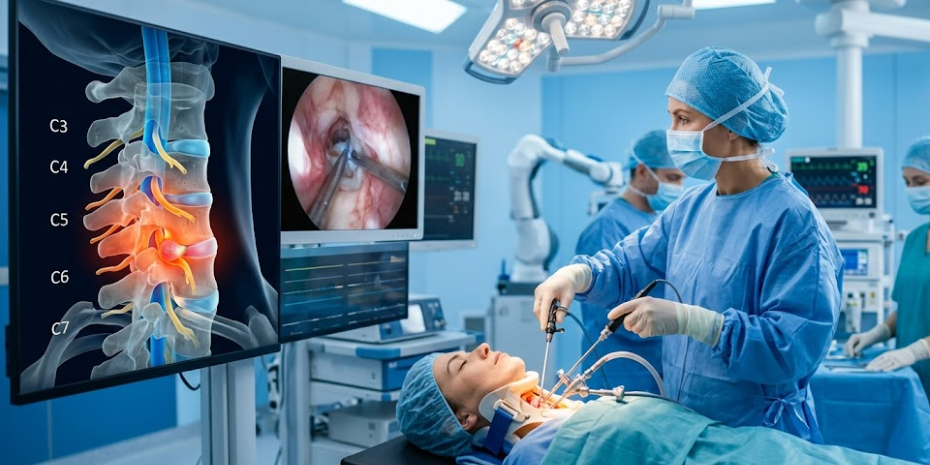
Advanced Minimally Invasive Surgery for Neck Disc Problems & Nerve Compression
Cervical Endoscopic Spine Surgery is a modern minimally invasive procedure used to treat selected neck spine conditions such as cervical slipped disc, nerve compression, and cervical canal stenosis.
The procedure uses advanced endoscopic technology to access the cervical spine through very small incisions while minimizing damage to surrounding muscles and tissues.
Compared to traditional open neck surgery, endoscopic techniques aim to provide:
Smaller incisions
Less tissue disruption
Faster recovery
Reduced postoperative pain
Early mobilization
Modern cervical endoscopic procedures represent an important advancement in minimally invasive spine care.
What is Cervical Endoscopic Spine Surgery?
The cervical spine refers to the neck portion of the spine.
Cervical Endoscopic Spine Surgery is a minimally invasive procedure performed using:
A high-definition endoscopic camera
Specialized surgical instruments
Tiny skin incisions or portals
The endoscope provides magnified visualization of nerves, discs, and spinal structures, allowing precise treatment with minimal tissue damage.
Common Procedures Include
Endoscopic Cervical Discectomy
Removal of slipped disc material compressing the nerve.
Endoscopic Cervical Decompression
Relieving pressure on nerves or the spinal canal.
Selected Endoscopic Foraminal Procedures
Expanding nerve exit pathways to reduce compression.
The exact technique depends on the patient’s condition and imaging findings.
Who May Need Cervical Endoscopic Spine Surgery?
This procedure may be considered for selected patients with cervical spine problems that do not improve with conservative treatment.
Common Conditions Treated
Cervical Slipped Disc
Disc herniation causing nerve compression.
Cervical Radiculopathy
Neck-related nerve pain radiating into the shoulder or arm.
Cervical Foraminal Stenosis
Narrowing around the nerve exit pathways.
Selected Cervical Canal Stenosis Cases
Compression of nerves due to spinal narrowing.
Persistent Arm Pain or Numbness
Symptoms caused by cervical nerve compression.
Common Symptoms That May Require Evaluation
Neck pain
Arm pain
Tingling in arms or fingers
Numbness
Weakness in arms or hands
Shoulder pain
Difficulty with neck movement
Symptoms not improving with medicines or physiotherapy
Not every cervical disc problem requires surgery.
Many patients improve with:
Medications
Physiotherapy
Posture correction
Lifestyle modification
Non-surgical spine care
Surgery is usually considered only when symptoms persist or neurological problems develop.
How is Cervical Endoscopic Spine Surgery Performed?
Step-by-Step Overview
Small Incisions
Tiny skin openings are created near the affected cervical level.
Endoscopic Visualization
A high-definition camera provides magnified surgical visualization.
Specialized Instrument Access
Fine surgical instruments are introduced through the working channel.
Nerve Decompression
Compressed nerves or disc fragments are carefully treated.
Preservation of Muscles & Tissues
The minimally invasive approach reduces tissue trauma compared to open surgery.
Surgical Approaches in Cervical Endoscopic Surgery
Depending on the spinal condition, the surgeon may use:
Posterior Endoscopic Approach
Accessing the spine from the back of the neck.
Anterior Endoscopic Approach
Accessing selected disc problems from the front of the neck.
The approach is individualized based on:
Disc location
Type of compression
Patient anatomy
MRI findings
Benefits of Cervical Endoscopic Spine Surgery
Key Advantages
Minimally Invasive Technique
Tiny incisions reduce surgical trauma.
Less Muscle Damage
Muscles are preserved rather than extensively detached.
Reduced Postoperative Pain
Minimal tissue injury may improve comfort after surgery.
Faster Recovery
Many patients recover faster compared to traditional open surgery.
Smaller Scars
Cosmetic outcomes are generally improved.
Reduced Blood Loss
Smaller surgical exposure often reduces bleeding.
Early Mobilization
Walking and movement usually begin early.
Shorter Hospital Stay
Hospitalization may be reduced in selected patients.
Enhanced Visualization
The endoscopic camera provides magnified illumination of spinal structures.
Risks & Limitations of Cervical Endoscopic Surgery
Although cervical endoscopic surgery offers many advantages, every spinal procedure carries potential risks.
Possible Risks Include
Infection
Bleeding
Persistent pain
Nerve irritation or injury
Dural tear (CSF leak)
Hoarseness in selected anterior procedures
Difficulty swallowing temporarily
Recurrent symptoms
Incomplete symptom relief
Limitations of Cervical Endoscopic Surgery
Not all cervical spine conditions are suitable for endoscopic treatment.
Alternative procedures may be more appropriate for:
Severe spinal instability
Major cervical deformity
Advanced spinal cord compression
Complex multi-level disease
Certain tumors or infections
Careful patient selection is essential for optimal outcomes.
Recovery Timeline After Cervical Endoscopic Spine Surgery
Recovery varies depending on:
Severity of nerve compression
Duration of symptoms
Procedure performed
Patient health and rehabilitation
General Recovery Timeline
Same Day / Next Day
Walking and gentle movement usually begin early
1–2 Weeks
Reduction in surgical discomfort
Light daily activities resumed
2–6 Weeks
Improvement in arm pain and mobility
Gradual return to routine activities
6–12 Weeks
Continued rehabilitation and strengthening
Physiotherapy, posture correction, and neck strengthening exercises may be recommended during recovery.
Who May Not Be Suitable for Cervical Endoscopic Surgery?
Alternative treatment approaches may be recommended for patients with:
Severe cervical instability
Extensive spinal cord compression
Complex deformities
Multi-level advanced disease
Certain revision surgery cases
The final treatment decision should always be individualized after detailed clinical and MRI evaluation.
Frequently Asked Questions
Is Cervical Endoscopic Spine Surgery Safe?
When performed by experienced spine surgeons in appropriately selected patients, it is considered a safe and advanced minimally invasive option.
Will There Be a Large Scar?
No. The procedure uses very small incisions, resulting in minimal scarring.
How Long is Hospital Stay?
Many patients require a short hospital stay depending on the procedure and recovery progress.
Is Recovery Faster Than Open Surgery?
Many patients experience faster recovery and less postoperative discomfort compared to traditional open procedures.
Can Neck Pain and Arm Pain Improve After Surgery?
The goal of surgery is to relieve nerve compression and improve symptoms such as arm pain, numbness, and weakness.
Does Every Cervical Disc Problem Need Surgery?
No. Most cervical spine conditions improve with conservative treatment and do not require surgery.
When Can I Return to Work?
Return to work depends on the type of procedure, recovery progress, and job requirements.
Ethical & Evidence-Based Cervical Spine Care
Modern cervical spine treatment should focus on:
Accurate diagnosis
Conservative care whenever appropriate
Individualized treatment planning
Evidence-based decision-making
Minimally invasive options when suitable
The goal is always to provide the safest and most effective treatment while avoiding unnecessary surgery.
Book a Consultation for Cervical Endoscopic Spine Surgery
If you are experiencing persistent neck pain, arm pain, numbness, tingling, or weakness, expert spine evaluation can help determine whether cervical endoscopic spine surgery may be appropriate for your condition.
Schedule Your Appointment Today
MRI Review
Cervical Spine Evaluation
Endoscopic Spine Surgery Consultation
Second Opinion for Spine Surgery
Personalized Treatment Planning