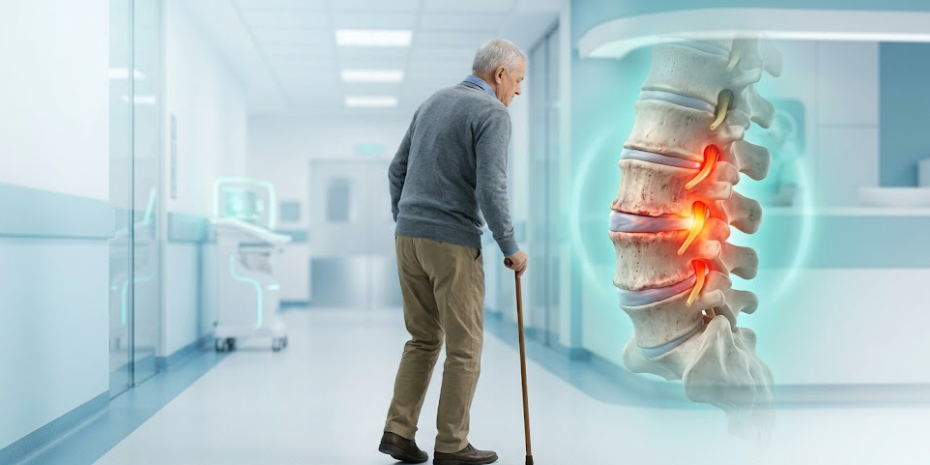
Understanding Spine Fractures in Elderly Patients
Spine fractures are a common problem in elderly individuals, especially those with osteoporosis or weakened bones.
In many cases, even a minor fall, sudden bending movement, coughing episode, or trivial trauma can lead to a spinal fracture.
These fractures can cause:
Severe back pain
Difficulty standing or walking
Reduced mobility
Loss of independence
Progressive spinal deformity
Early diagnosis and timely treatment are important to reduce pain, restore mobility, and prevent long-term complications.
Modern minimally invasive and advanced spine surgery techniques now allow selected patients to recover faster with minimal tissue damage and early mobilization.
What are Osteoporotic Compression Fractures?
An osteoporotic compression fracture occurs when weakened spinal bones collapse or compress due to reduced bone strength.
These fractures most commonly affect the:
Thoracic spine (mid-back)
Lumbar spine (lower back)
Osteoporosis gradually weakens bones over time, making them fragile and more prone to fractures.
Why Elderly Patients Develop Spine Fractures After Trivial Trauma
The Role of Osteoporosis
As people age, bone density naturally decreases.
In osteoporosis:
Bones become porous and fragile
Vertebrae lose strength
Minor stress may cause fractures
This means even small incidents can trigger a spinal fracture.
Common Triggers
Slipping in the bathroom
Sudden twisting movement
Lifting light objects
Sitting abruptly
Minor falls
Coughing or sneezing in severe osteoporosis
Many patients are surprised because the injury appears too minor to cause such severe pain.
Symptoms of Spine Compression Fractures
Symptoms can vary depending on fracture severity.
Common Symptoms
Sudden onset back pain
Severe pain while standing or walking
Difficulty getting out of bed
Pain during movement
Stooped posture
Height loss over time
Reduced mobility
Some patients may gradually develop spinal deformity or kyphosis if fractures remain untreated.
Why Early Diagnosis is Important
Untreated spinal compression fractures may lead to:
Persistent pain
Reduced mobility
Muscle weakness
Bedridden state
Increased risk of further fractures
Loss of independence in elderly patients
Early treatment helps improve mobility and reduces complications associated with prolonged immobility.
Diagnosis of Spine Fractures
Evaluation usually includes:
Clinical examination
X-rays
MRI scan
CT scan in selected cases
Bone density evaluation (DEXA scan)
MRI is particularly useful for identifying:
Fresh fractures
Nerve compression
Bone edema
Multiple compression fractures
Non-Surgical Treatment Options
Many stable fractures can initially be managed conservatively.
Conservative Treatment May Include
Pain Management
Medicines to reduce pain and inflammation.
Bracing
Spinal braces may help support healing in selected patients.
Osteoporosis Treatment
Calcium, Vitamin D, and bone-strengthening medications may be prescribed.
Physiotherapy & Rehabilitation
Gentle exercises and mobility training help restore function.
However, severe pain or unstable fractures may require minimally invasive spine procedures.
Role of Advanced Scar-less, Suture-less Spine Surgery
Modern Minimally Invasive Treatment Options
Advanced minimally invasive spine procedures now allow treatment through tiny skin openings with minimal tissue injury.
These techniques are often referred to as:
Scar-less spine surgery
Stitch-less spine surgery
Suture-less minimally invasive spine procedures
Although no surgery is completely scar-free, modern endoscopic and minimally invasive approaches significantly reduce surgical trauma compared to traditional open surgery.
Benefits of Minimally Invasive Spine Fracture Surgery
Key Advantages
Tiny incisions
Minimal muscle damage
Reduced blood loss
Less postoperative pain
Faster recovery
Lower infection risk
Smaller scars
Shorter hospital stay
Early mobilization
These benefits are especially important in elderly patients, where prolonged bed rest can lead to additional health complications.
Vertebroplasty & Kyphoplasty
Minimally Invasive Fracture Stabilization Procedures
In selected osteoporotic compression fractures, procedures such as:
Vertebroplasty
Kyphoplasty
may help stabilize the fractured vertebra and reduce pain.
These procedures involve strengthening the collapsed bone using specialized medical cement through minimally invasive techniques.
Potential Benefits
Rapid pain relief
Improved mobility
Early walking
Reduced need for prolonged bed rest
Suitability depends on fracture type, MRI findings, and patient condition.
Early Mobilization After Spine Fracture Treatment
Why Early Mobilization Matters
Prolonged bed rest in elderly patients can increase the risk of:
Muscle weakness
Pneumonia
Bed sores
Blood clots
Loss of independence
Modern minimally invasive treatment focuses on helping patients return to movement as early as safely possible.
Benefits of Early Mobilization
Faster recovery
Improved confidence
Better muscle strength
Reduced complications
Improved quality of life
Many patients are encouraged to begin assisted walking soon after treatment depending on their condition.
Recovery After Spine Fracture Treatment
Recovery depends on:
Severity of fracture
Bone quality
Overall health
Treatment type
Rehabilitation program
General Recovery Timeline
Early Phase
Pain control
Assisted mobility
Gradual walking
Intermediate Recovery
Physiotherapy
Strength improvement
Functional rehabilitation
Long-Term Recovery
Osteoporosis management
Balance training
Fall prevention strategies
Long-term bone health management is important to reduce the risk of future fractures.
Preventing Osteoporotic Spine Fractures
Prevention Strategies
Regular bone density screening
Calcium and Vitamin D supplementation
Weight-bearing exercises
Fall prevention measures
Osteoporosis treatment
Maintaining muscle strength and balance
Early osteoporosis treatment can significantly reduce fracture risk.
When Should You Seek Medical Attention?
Consult a spine specialist if you experience:
Sudden severe back pain
Pain after a fall or trivial injury
Difficulty standing or walking
Progressive stooped posture
Persistent pain in elderly age
Early diagnosis may help prevent complications and improve recovery.
Frequently Asked Questions
Can Minor Falls Cause Spine Fractures in Elderly Patients?
Yes. Osteoporosis weakens bones, making even minor trauma capable of causing fractures.
Are All Spine Fractures Dangerous?
Not all fractures are severe, but untreated fractures can lead to chronic pain and deformity.
Is Surgery Always Required?
No. Many fractures improve with conservative treatment, while selected patients benefit from minimally invasive procedures.
What is Scar-less or Stitch-less Spine Surgery?
These terms refer to advanced minimally invasive techniques using very small incisions and minimal tissue disruption.
How Soon Can Elderly Patients Walk After Treatment?
Many patients are encouraged to begin early mobilization depending on fracture stability and treatment type.
Book a Consultation for Spine Fractures & Osteoporosis
If you or a loved one is experiencing severe back pain after a minor fall or injury, expert evaluation can help identify spinal fractures early and guide appropriate treatment.
Schedule Your Appointment Today
Spine Fracture Evaluation
MRI Review
Osteoporosis Assessment
Minimally Invasive Spine Surgery Consultation
Second Opinion for Spine Fractures