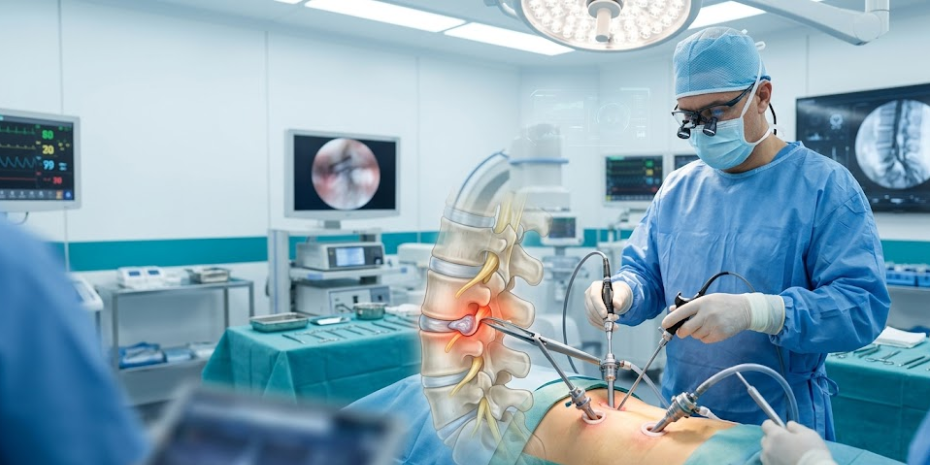
Advanced Minimally Invasive Surgery for Slipped Disc & Sciatica
UBE Discectomy (Unilateral Biportal Endoscopic Discectomy) is an advanced minimally invasive spine surgery used to treat slipped disc (lumbar disc herniation) and nerve compression causing sciatica.
The procedure uses modern endoscopic technology to remove the disc fragment pressing on the nerve through tiny incisions while preserving surrounding muscles and spinal structures.
UBE is considered one of the latest advancements in 4th Generation Endoscopic Spine Surgery and is increasingly used worldwide for selected spinal conditions.
What is UBE Discectomy?
UBE (Unilateral Biportal Endoscopic) Discectomy is a minimally invasive procedure performed using:
One small portal for the endoscopic camera
One small portal for surgical instruments
The camera provides high-definition magnified visualization, while specialized instruments are used to remove the herniated disc fragment compressing the nerve.
Unlike traditional open surgery, UBE minimizes tissue damage and preserves normal spinal anatomy as much as possible.
Who May Need UBE Discectomy?
UBE Discectomy may be considered for patients with slipped disc causing persistent nerve compression symptoms.
Common Conditions Treated
Lumbar disc herniation
Slipped disc
Sciatica
Nerve compression
Recurrent disc prolapse in selected cases
Common Symptoms That May Indicate Need for Surgery
Severe leg pain (Sciatica)
Persistent numbness or tingling
Weakness in the leg or foot
Difficulty walking
Pain not improving with medicines or physiotherapy
Recurrent severe symptoms
MRI-confirmed nerve compression
Not every slipped disc requires surgery.
Many patients improve with conservative treatment including medicines, physiotherapy, and lifestyle modification.
Surgery is usually considered only when symptoms persist or neurological problems develop.
How is UBE Discectomy Performed?
Step-by-Step Overview
Small Skin Incisions
Two tiny incisions (portals) are made near the affected spinal level.
Endoscopic Visualization
A high-definition endoscopic camera is inserted through one portal to visualize nerves, disc material, and surrounding structures.
Instrument Access
Specialized surgical instruments are introduced through the second portal.
Nerve Decompression
The herniated disc fragment compressing the nerve is carefully removed.
Preservation of Normal Structures
Muscles, ligaments, and bones are preserved as much as possible to reduce tissue trauma.
Advantages of UBE Discectomy
Key Benefits
Minimally Invasive Technique
Tiny incisions reduce surgical trauma.
Less Muscle Damage
Muscles are preserved instead of extensively cut.
Reduced Postoperative Pain
Smaller incisions and less tissue disruption help reduce pain.
Faster Recovery
Patients often recover faster compared to traditional open surgery.
Smaller Scars
Cosmetic outcomes are generally better.
Reduced Blood Loss
Minimal tissue disruption usually means less bleeding.
Early Mobilization
Many patients begin walking within hours after surgery.
Shorter Hospital Stay
Hospitalization is often shorter compared to conventional surgery.
Better Visualization
The endoscopic camera provides magnified and illuminated surgical views.
Why UBE is Considered 4th Generation Spine Surgery
UBE combines the advantages of:
Open spine surgery
Microscopic surgery
Tubular minimally invasive surgery
Endoscopic technology
The biportal system allows greater surgical freedom and improved decompression capability compared to some older endoscopic techniques.
This is why UBE is increasingly recognized as a major advancement in minimally invasive spine surgery.
Risks & Limitations of UBE Discectomy
Although UBE is an advanced and minimally invasive procedure, every surgery has potential risks and limitations.
Possible Risks Include
Infection
Bleeding
Persistent pain
Recurrent disc prolapse
Nerve irritation or injury
Dural tear (CSF leak)
Incomplete symptom relief
Limitations
UBE may not be suitable for:
Severe spinal instability
Major deformity
Certain complex multi-level conditions
Selected advanced degenerative cases
Careful patient selection and detailed MRI evaluation are important before surgery.
Recovery Timeline After UBE Discectomy
Recovery varies depending on:
Severity of nerve compression
Duration of symptoms
Patient health
Rehabilitation compliance
General Recovery Timeline
Same Day / Next Day
Walking usually begins within hours
1–2 Weeks
Reduction in surgical discomfort
Light activities resumed
2–6 Weeks
Improved mobility
Gradual return to work in selected patients
6–12 Weeks
Progressive strengthening and rehabilitation
Physiotherapy, posture correction, and lifestyle modification remain important for long-term spine health.
Who May Not Be Suitable for UBE Discectomy?
Not every patient is an ideal candidate.
Alternative treatment options may be recommended for:
Severe spinal instability
Significant deformity
Certain infections or tumors
Advanced multi-level disease
Complex revision cases in selected situations
The final decision depends on clinical examination and imaging findings.
Frequently Asked Questions
Is UBE Discectomy Painful?
The procedure is performed under anesthesia. Postoperative pain is generally less compared to traditional open surgery.
Will There Be a Large Scar?
No. UBE uses very small incisions, resulting in minimal scarring.
How Long is Hospital Stay?
Many patients require a short hospital stay depending on the procedure and recovery.
Can I Walk After Surgery?
Most patients begin walking within hours or by the next day.
Is UBE Better Than Open Surgery?
UBE offers several minimally invasive advantages such as smaller incisions, reduced tissue damage, and faster recovery in appropriately selected patients.
Can the Disc Slip Again?
Recurrent disc prolapse is possible, although many patients experience long-term symptom relief after surgery.
When Can I Return to Work?
Return to work depends on recovery progress and job type. Many patients resume light activities within a few weeks.
Book a Consultation for UBE Discectomy
If you are suffering from persistent sciatica, slipped disc symptoms, numbness, or weakness, expert spine evaluation can help determine whether UBE Discectomy may be appropriate for your condition.
Schedule Your Appointment Today
MRI Review
Sciatica Evaluation
Endoscopic Spine Surgery Consultation
Second Opinion for Spine Surgery
Personalized Treatment Planning