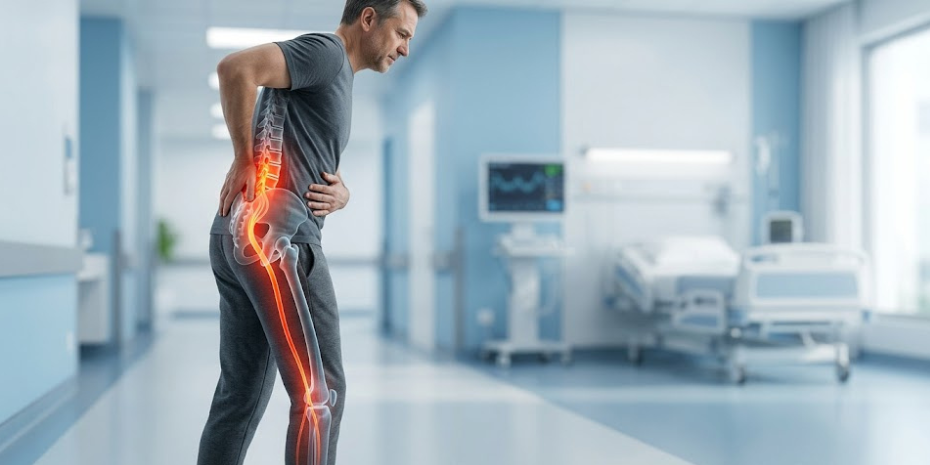
Understanding Sciatica & Modern Treatment Options
What Is Sciatica?
Sciatica is one of the most common causes of leg pain that originates from the spine. It occurs when the sciatic nerve—the largest nerve in the body—becomes irritated or compressed, usually in the lower back.
Sciatica is not a disease itself; it is a symptom of an underlying spinal condition such as a slipped disc (lumbar disc herniation), spinal stenosis, or other causes of nerve compression. The pain can range from mild discomfort to severe shooting pain that affects walking, sitting, sleeping, and daily activities.
What Causes Sciatica?
Sciatica develops when nerves in the lower spine become compressed or inflamed. Common causes include:
Cause | Description |
Slipped Disc (Lumbar Disc Herniation) | One of the most common causes where a disc presses on nearby nerves |
Lumbar Canal Stenosis | Narrowing of the spinal canal leading to nerve compression |
Foraminal Stenosis | Narrowing of the nerve exit passage |
Degenerative Spine Disease | Age-related wear and tear affecting discs and joints |
Spondylolisthesis | Forward slipping of one vertebra over another |
Piriformis Syndrome or Muscle Spasm | Less common causes that may mimic sciatica symptoms |
Common Symptoms of Sciatica
Sciatica typically affects one leg, although both legs may occasionally be involved. Symptoms may include:
Sharp, shooting pain down the leg
Burning sensation
Electric shock-like pain
Tingling or pins-and-needles sensation
Numbness
Weakness in the leg or foot
Pain radiating from the lower back to the foot
Increased pain while sitting, coughing, or sneezing
The severity of symptoms varies depending on the degree of nerve compression.
When Should You Seek Immediate Medical Attention?
Certain symptoms may indicate significant nerve compression and require urgent medical evaluation. Contact a spine specialist immediately if you experience:
Progressive weakness in the leg
Difficulty walking
Foot drop (difficulty lifting the front part of the foot)
Loss of bladder control
Loss of bowel control
Numbness in the groin or saddle area
Severe worsening pain
Fever associated with back pain
Unexplained weight loss
The Role of MRI in Diagnosing Sciatica
Why Is MRI Important?
MRI (Magnetic Resonance Imaging) is one of the most valuable investigations for determining the exact cause of sciatica. It provides detailed images of the spine and surrounding structures.
MRI can help identify:
Slipped discs
Nerve compression
Spinal canal narrowing
Disc degeneration
Ligament and soft tissue abnormalities
What MRI Helps Determine
Severity of nerve compression
Exact location of the problem
Whether surgery may be necessary
Suitability for minimally invasive treatment options
Important: MRI findings should always be interpreted together with symptoms and physical examination findings. Not every abnormality seen on MRI requires surgery.
Non-Surgical Treatment for Sciatica
Most patients improve with conservative treatment and do not require surgery.
Medications
Pain-relieving and anti-inflammatory medications may help reduce symptoms and improve mobility.
Physiotherapy
A structured physiotherapy program can help by:
Improving flexibility
Strengthening core muscles
Correcting posture
Reducing the risk of recurrence
Activity Modification
Maintaining gentle activity while avoiding excessive strain often supports recovery.
Lifestyle Changes
Simple lifestyle modifications can help manage symptoms and prevent future episodes:
Weight management
Improved posture
Ergonomic workplace adjustments
Regular exercise
Epidural or Nerve Root Injections
In selected patients, targeted injections may reduce inflammation around irritated nerves and provide temporary relief.
When Conservative Treatment Works Best
Non-surgical treatment is often effective when:
Symptoms are mild to moderate
No significant weakness is present
Symptoms are gradually improving
Daily activities remain manageable
Advanced Endoscopic Treatment Options for Sciatica
When significant nerve compression persists despite conservative treatment, endoscopic spine surgery may be considered.
Modern endoscopic techniques allow surgeons to relieve nerve pressure through very small incisions while minimizing damage to surrounding tissues.
Endoscopic Discectomy
This procedure removes the slipped disc fragment that is compressing the nerve.
Transforaminal Endoscopic Surgery
A minimally invasive approach that accesses the spine through the natural nerve opening to relieve compression.
UBE / Biportal Endoscopic Spine Surgery
An advanced dual-portal technique that offers enhanced visualization and greater surgical flexibility.
Benefits of Endoscopic Spine Surgery
Compared with traditional open surgery, endoscopic procedures may offer several advantages:
Tiny incisions
Minimal muscle damage
Reduced postoperative pain
Less blood loss
Faster recovery
Earlier mobilization
Shorter hospital stay
Smaller scars
The goal is to effectively decompress the nerve while preserving normal spinal structures.
When Is Surgery Recommended?
Surgery may be considered if:
Severe sciatica persists despite treatment
Symptoms fail to improve with conservative care
Progressive weakness develops
Walking becomes difficult
MRI shows significant nerve compression
Quality of life is significantly affected
The decision to proceed with surgery depends on symptoms, MRI findings, neurological examination, and individual patient needs.
Recovery After Endoscopic Sciatica Surgery
Recovery varies depending on the severity of nerve compression and the procedure performed.
Timeframe | What to Expect |
Same Day / Next Day | Walking often begins early |
1–2 Weeks | Gradual improvement in pain and return to light activities |
2–6 Weeks | Improved mobility and return to routine activities in selected patients |
6–12 Weeks | Ongoing rehabilitation and functional recovery |
Physiotherapy and posture correction remain important parts of recovery.
Frequently Asked Questions
Is Sciatica Permanent?
No. Many patients recover completely with appropriate treatment.
Can Sciatica Heal Without Surgery?
Yes. Most cases improve with medications, physiotherapy, activity modification, and lifestyle changes.
Is MRI Necessary for Every Patient?
Not always. MRI is generally recommended when symptoms are severe, persistent, or associated with weakness or neurological deficits.
Is Endoscopic Spine Surgery Safe?
When performed by experienced spine surgeons in appropriately selected patients, endoscopic spine surgery is considered a safe and effective minimally invasive treatment option.
How Long Does Recovery Take?
Recovery depends on the severity of nerve compression and the treatment performed, but many patients experience significant improvement within weeks.
Book a Consultation for Sciatica Treatment
If you are experiencing persistent leg pain, numbness, tingling, or weakness due to sciatica, an expert spine evaluation can help determine the most appropriate treatment plan.
Services Available
Sciatica Evaluation
MRI Review
Endoscopic Spine Surgery Consultation
Second Opinion
Personalized Spine Care
Early diagnosis and treatment can help prevent progression and improve outcomes. If sciatica is affecting your daily activities, consult a spine specialist to discuss your treatment options.