Back pain, sciatica, slipped disc, and lumbar canal stenosis are among the most common spine problems affecting adults today. While many patients improve with medicines, physiotherapy, posture correction, and lifestyle changes, some continue to suffer from persistent nerve compression and may require surgery.
Over the last decade, spine surgery has evolved significantly toward minimally invasive techniques that aim to reduce tissue damage, speed up recovery, and improve patient comfort. One of the most advanced developments in this field is UBE Spine Surgery, also known as Unilateral Biportal Endoscopic Spine Surgery.
UBE is increasingly recognized as part of the evolution toward 4th Generation Endoscopic Spine Surgery because it combines the advantages of modern endoscopic visualization with greater surgical flexibility and precision.
What is UBE Spine Surgery?
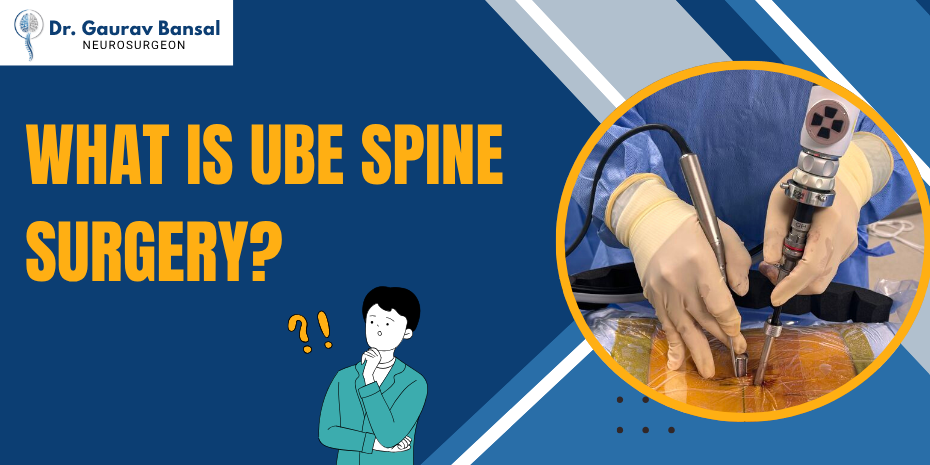
UBE (Unilateral Biportal Endoscopy) is an advanced minimally invasive spine surgery technique performed using:
Two tiny portals (small skin openings)
A high-definition endoscopic camera
Specialized surgical instruments
Unlike traditional endoscopic surgery where both the camera and instruments pass through a single channel, UBE uses:
One portal for the camera
One portal for surgical instruments
This “biportal” system allows the surgeon to work more freely while maintaining continuous magnified visualization of the spine.
The procedure is designed to relieve pressure on spinal nerves while minimizing damage to muscles, bones, and surrounding tissues.
Why is it Called Biportal Endoscopic Surgery?
The term “biportal” simply means “two portals.”
In UBE surgery:
One portal is used for the endoscope (camera)
The second portal is used for surgical instruments
This separation improves:
Surgical maneuverability
Visualization
Instrument movement
Precision during decompression
The technique allows surgeons to perform minimally invasive surgery while working with a wider and more flexible operating field.
Which Conditions Can Be Treated with UBE Spine Surgery?
UBE may be used in selected patients suffering from:
Slipped Disc (Lumbar Disc Herniation)
Disc material compresses nearby nerves causing back pain and sciatica.
Sciatica
Pain radiating from the lower back into the leg due to nerve compression.
Lumbar Canal Stenosis
Narrowing of the spinal canal leading to leg pain and walking difficulty.
Foraminal Stenosis
Compression around nerve exit pathways.
Recurrent Disc Herniation
Selected revision surgery cases after previous spine surgery.
Selected Spine Fusion Procedures
Advanced UBE-TLIF techniques may be used in selected patients requiring spinal stabilization.
The final treatment plan always depends on MRI findings, spinal stability, patient symptoms, and overall health.
How is UBE Different from Traditional Spine Surgery?
Traditional open spine surgery often requires:
Larger incisions
Greater muscle dissection
More tissue exposure
UBE aims to reduce tissue disruption by using small portals and endoscopic visualization.
Potential advantages may include:
Smaller incisions
Less muscle damage
Reduced blood loss
Faster mobilization
Smaller scars
Earlier recovery in selected patients
However, traditional surgery still remains important for many complex spinal conditions. No single technique is best for every patient.
How is UBE Different from Monoportal Endoscopy?
In Monoportal Endoscopic Surgery:
Both the camera and instruments pass through one portal.
In UBE Surgery:
The camera and instruments are separated into two portals.
This may provide:
Greater instrument flexibility
Wider visualization
Improved decompression capability
Better access in certain stenosis or fusion cases
Both techniques are valuable minimally invasive options, and the ideal approach depends on the patient’s condition and surgeon expertise.
Why is UBE Called 4th Generation Endoscopic Spine Surgery?
UBE is often described as part of the “4th Generation” evolution of spine surgery because it combines features from:
Traditional spine surgery
Microscopic spine surgery
Minimally invasive tubular surgery
Modern endoscopic technology
The goal is to expand the range of spinal conditions that can be treated through minimally invasive techniques while preserving normal tissues as much as possible.
What Happens During UBE Surgery?
Although the exact procedure varies depending on the condition being treated, the general steps include:
Small skin portals are created near the affected spinal level.
A high-definition camera is inserted through one portal.
Specialized instruments are inserted through the second portal.
The compressed nerve is carefully decompressed.
Disc fragments, thickened ligaments, or bone causing pressure are removed.
The portals are closed with minimal skin sutures.
The procedure is usually performed under anesthesia in a specialized operating setup.
Benefits of UBE Spine Surgery
Potential benefits of UBE surgery may include:
Minimally invasive approach
Smaller incisions
Reduced muscle injury
Less postoperative discomfort
Faster recovery in selected patients
Early mobilization
Better visualization using high-definition endoscopy
Reduced hospital stay in selected cases
Recovery depends on the patient’s condition, overall health, and type of surgery performed.
Are There Any Risks or Limitations?
Like all spinal procedures, UBE surgery also carries potential risks, including:
Infection
Bleeding
Nerve irritation or injury
Persistent pain
Dural tear (CSF leak)
Recurrent symptoms
Incomplete symptom relief
Additionally, not every spinal condition is suitable for UBE surgery.
Certain patients may require:
Traditional open surgery
Microscopic surgery
Fusion procedures
Alternative minimally invasive techniques
Proper patient selection is extremely important.
Recovery After UBE Spine Surgery
Recovery timelines vary depending on the procedure and severity of nerve compression.
General Recovery Expectations
Same Day / Next Day
Walking often begins early.
1–2 Weeks
Reduction in surgical discomfort.
Light daily activities resumed.
2–6 Weeks
Gradual improvement in mobility and function.
6–12 Weeks
Rehabilitation and strengthening continue.
Long-term spine health also depends on posture correction, exercise, weight management, and lifestyle modification.
Frequently Asked Questions (FAQs)
Is UBE Spine Surgery Safe?
When performed by experienced spine surgeons in appropriately selected patients, UBE is considered a safe and advanced minimally invasive spine surgery technique.
Is UBE Surgery Painful?
The surgery is performed under anesthesia. Postoperative discomfort is generally less compared to traditional open surgery in selected cases.
How Long is the Hospital Stay?
Many patients require a shorter hospital stay depending on the procedure and recovery progress.
Can UBE Treat Sciatica?
Yes. UBE is commonly used to treat nerve compression causing sciatica in selected patients.
Does Every Slipped Disc Need UBE Surgery?
No. Most slipped disc cases improve with conservative treatment and do not require surgery.
Is UBE Better Than Other Spine Surgery Techniques?
No single technique is best for every patient. The ideal surgical approach depends on pathology, anatomy, spinal stability, patient factors, and surgeon expertise.
When Can I Return to Work?
Return to work depends on the type of surgery, recovery progress, and job requirements.